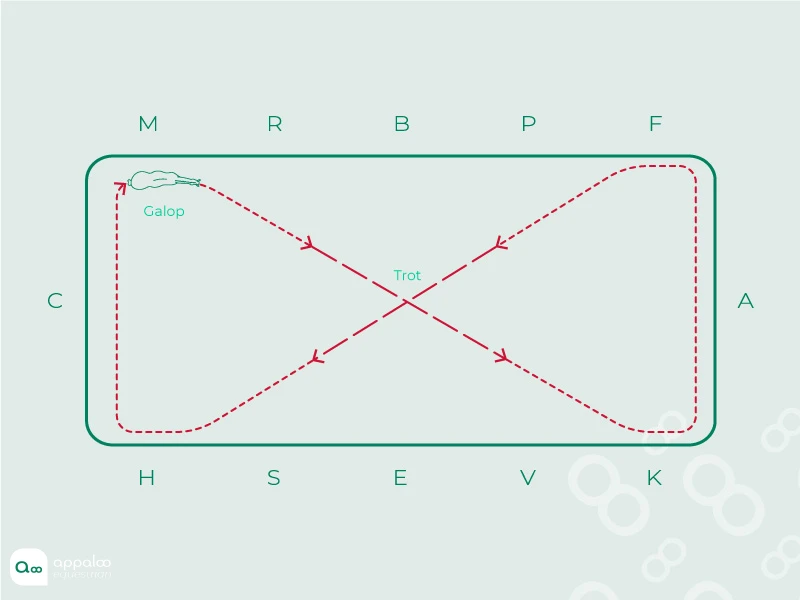
Dressage | Easy
Introduce flying changes

 Mustang
2 comments left · 1 published riding session
Dressage | Easy
Introduce flying changes
 PREMIUM
Groundwork | Easy
This exercise is often feared or even avoided, because we tend to believe that show jumping horses should never step into the water. Fake news! In this exercise, you’ll teach your horse to walk on a tarp so that later on, you can safely introduce jumping a water tray.
 PREMIUM
Groundwork | Hard
This exercise helps your horse: - Challenge his lateral balance - Activate the thoracic sling alternately left and right by shifting his body weight first onto the right shoulder, then onto the left
 PREMIUM
Lunging | Easy
This exercise helps your horse to: - Challenge his lateral balance, engaging his thoracic sling alternately to the right and left - Challenge his longitudinal balance, also engaging the thoracic sling - Take responsibility for maintaining his own balance
 PREMIUM
Lunging | Medium
Linking tight curves and straight lines on the lunge helps to: - challenge the horse’s lateral balance (and therefore engage the thoracic sling alternately on each side) - encourage the horse to take responsibility for maintaining his own balance
 PREMIUM
Lunging | Easy
or your horse to properly engage his thoracic sling, you’ll need him to be: - relaxed - in a rather low-head posture The spiral exercise helps develop lateral balance, which means the horse mobilizes his thoracic sling alternately on the right and left sides. Because this exercise involves riding on curves, often quite tight ones, be careful not to ask for it too long or too often. If your horse is young, has trouble finding his own balance, or has physical issues that show up on tight curves, limit this exercise to a few minutes each direction and prioritize wide curves (like the large spiral).
 PREMIUM
Dressage | Medium
Variations in frame and head height help challenge the horse’s balance and therefore the tone of his thoracic sling.
 PREMIUM
Dressage | Medium
La variation d'amplitude est un excellant indicateur de la tonicité de la sangle thoracique. Cette variation met l'équilibre du cheval à l'épreuve et lui demande donc de "se tenir" donc de maintenir son centre de gravité, et donc de solliciter sa sangle thoracique.
 PREMIUM
Dressage | Customizable
The walk-trot transition is a good indicator of the tone of the thoracic sling. If your horse tries to avoid using its thoracic sling, the quality of your transition will suffer.
 PREMIUM
Groundwork | Easy
Learn to obtain smooth and light lateral movements on the ground, starting from good hip control and a fine response to the stick cues.
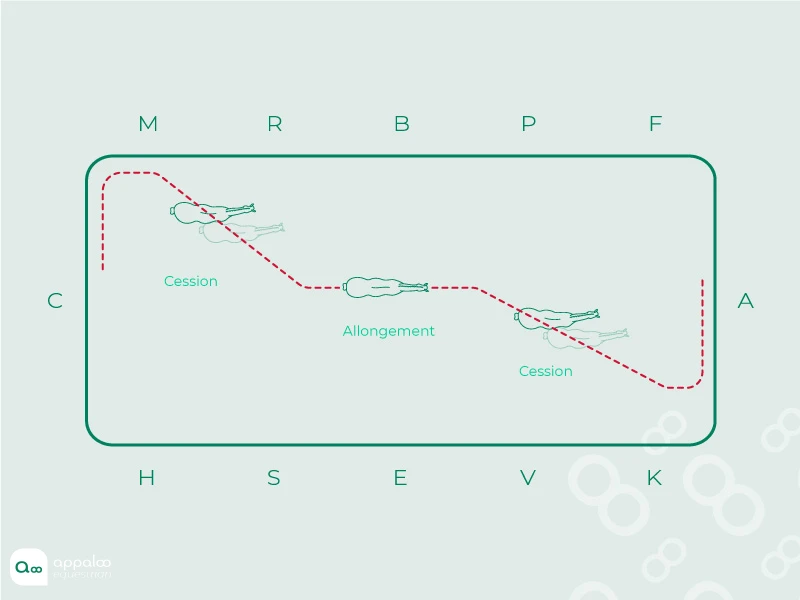
Dressage | Hard
To supple the horse, improve hindquarter engagement, and increase stride length.
 PREMIUM
Groundwork | Easy
Teaching the horse to move backward toward you by aspiration, meaning to step back while coming toward the human located behind him.
 PREMIUM
Groundwork | Medium
Desensitising the horse to objects on the ground so that he is not afraid when they pass in front of or behind him. 👉 This exercise is an excellent prerequisite for long-reining work, but it also helps make the horse braver, more confident, and calm in unusual situations.
 PREMIUM
Groundwork | Easy
The “changing eyes” exercise teaches the horse to follow a pressure, even when that pressure asks him to move in the opposite direction from the human. 🧠 This exercise develops: the horse’s ability to think, his ability to respond correctly to pressure, his confidence when moving without directly “following” the human.
 PREMIUM
Dressage | Easy
Letting the reins slip and varying your horse’s frame on a 20-meter circle
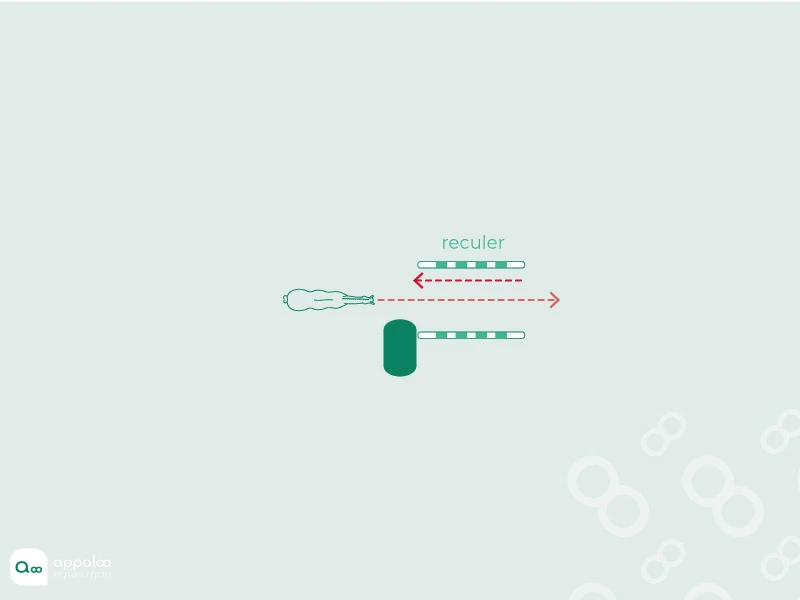
Groundwork | Easy
To refine the rein-back for horses that easily become frustrated or tense, and to help the horse enjoy the exercise.
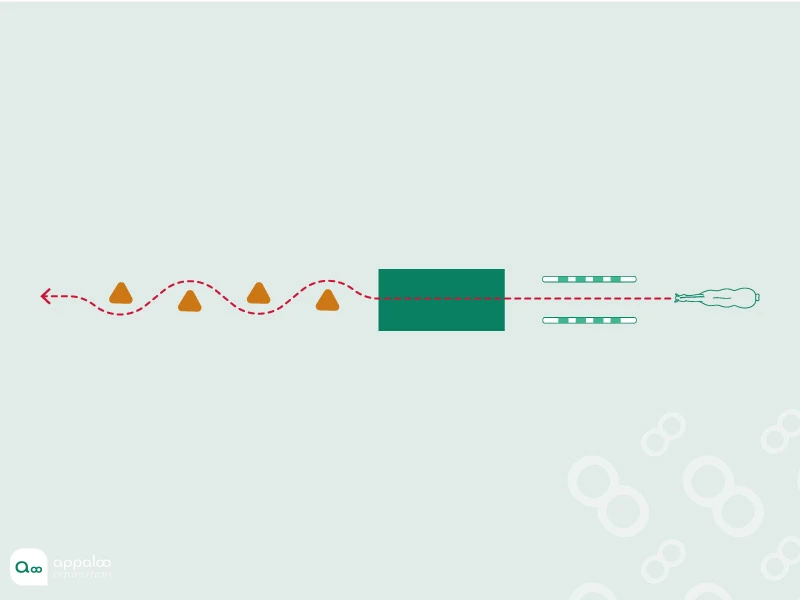
Groundwork | Easy
Accustom the horse to various types of footing, by adding increasing levels of difficulty.
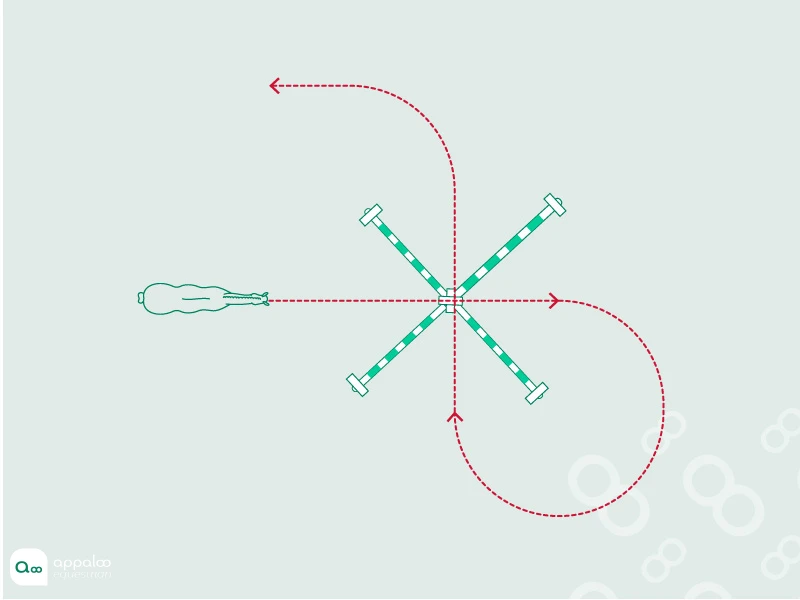
Jumping | Medium
– Work on riding curves and landing on the correct lead – Check the horse’s honesty over fences – Increase the reactivity of the forehand during the jump
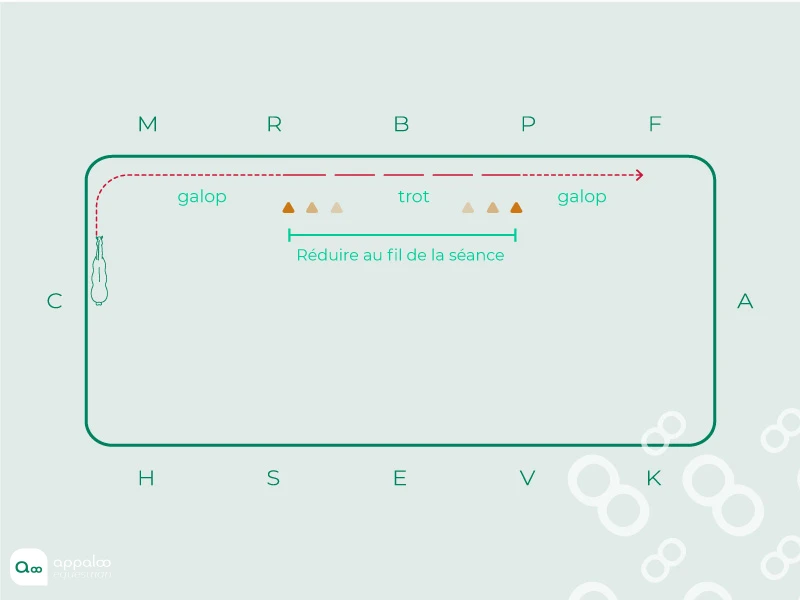
Dressage | Easy
Capture the horse’s attention and improve transitions.
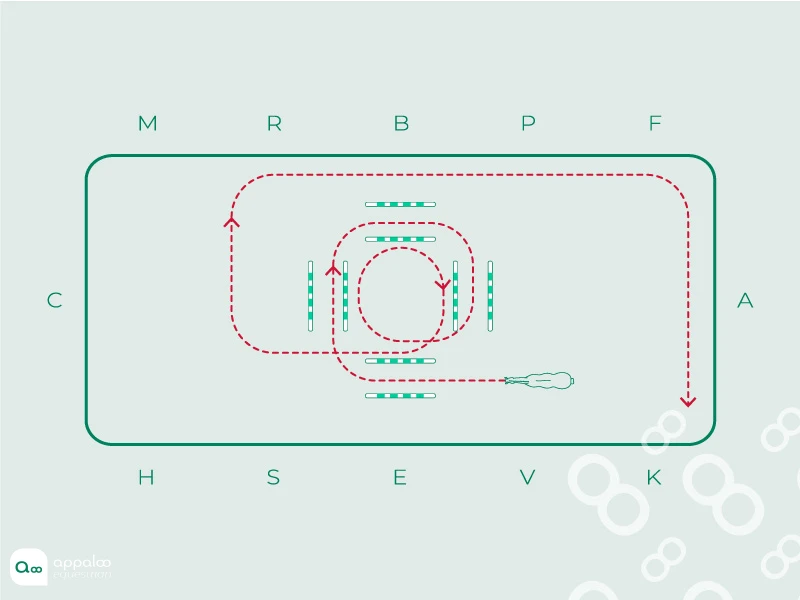
Dressage | Medium
To achieve changes in the horse’s frame at a specific gait.
Please sign in to save your favorites.