

Goal(s)
Capture the horse’s attention and improve transitions.
Process
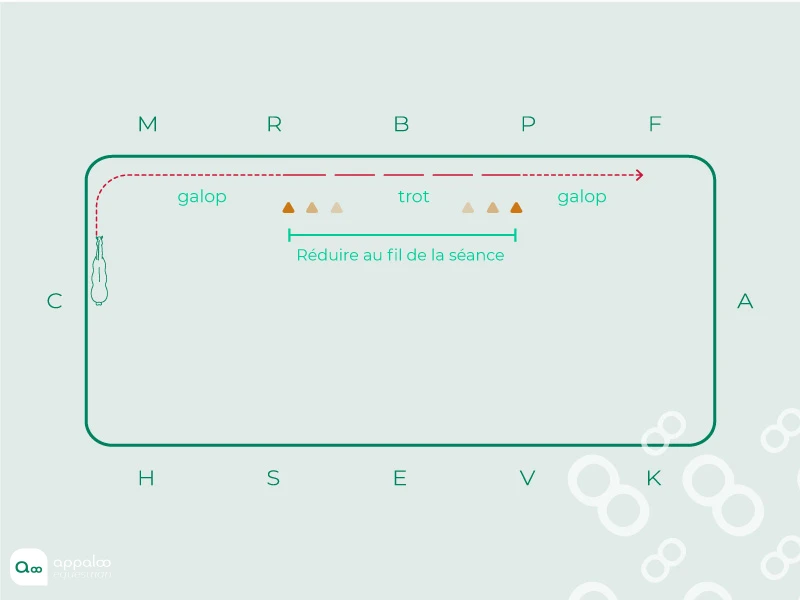
Place two cones on the quarter line or on the inner track. Stay on the track, approach at the canter, make a downward transition to trot in front of the first cone, and ask for an upward transition back to canter in front of the second cone. The exercise can also be performed with upward or downward transitions: approach at the trot, transition to canter in front of the first cone, and return to trot in front of the second cone. As the session progresses, gradually move the cones closer together so that the number of strides between transitions becomes shorter and shorter.
This exercise is highly adaptable, as it can be performed at any gait and with variable time between transitions, depending on the level of the horse and rider.
Difficulties
Adaptable
What the community says 💚 · 4

2

2

1


1
No other comments at the moment
Similar sessions
Dressage | Medium
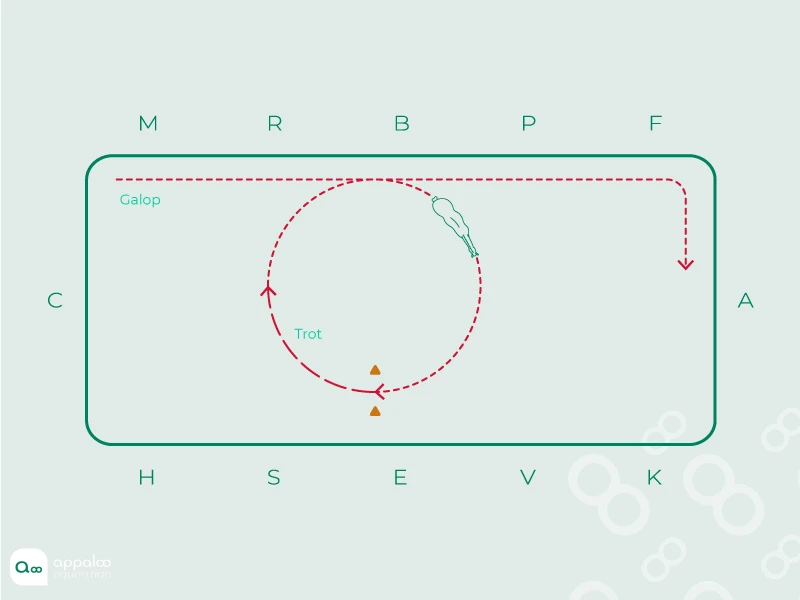
To work on impulsion, responsiveness, and flexion/acceptance of the bit during transitions.
Dressage | Easy
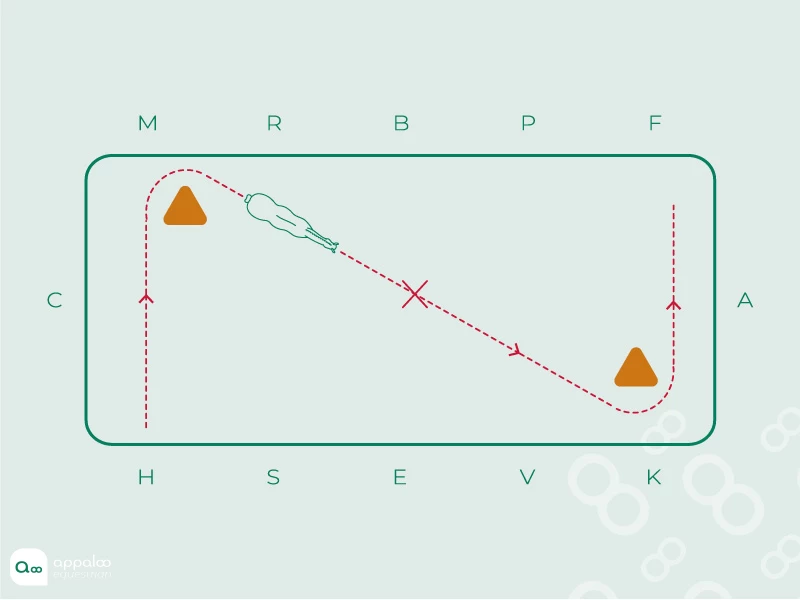
Improve precision and straightness in your diagonals.
 PREMIUM
Dressage | Medium
La variation d'amplitude est un excellant indicateur de la tonicité de la sangle thoracique. Cette variation met l'équilibre du cheval à l'épreuve et lui demande donc de "se tenir" donc de maintenir son centre de gravité, et donc de solliciter sa sangle thoracique.
 PREMIUM
Dressage | Medium
Variations in frame and head height help challenge the horse’s balance and therefore the tone of his thoracic sling.