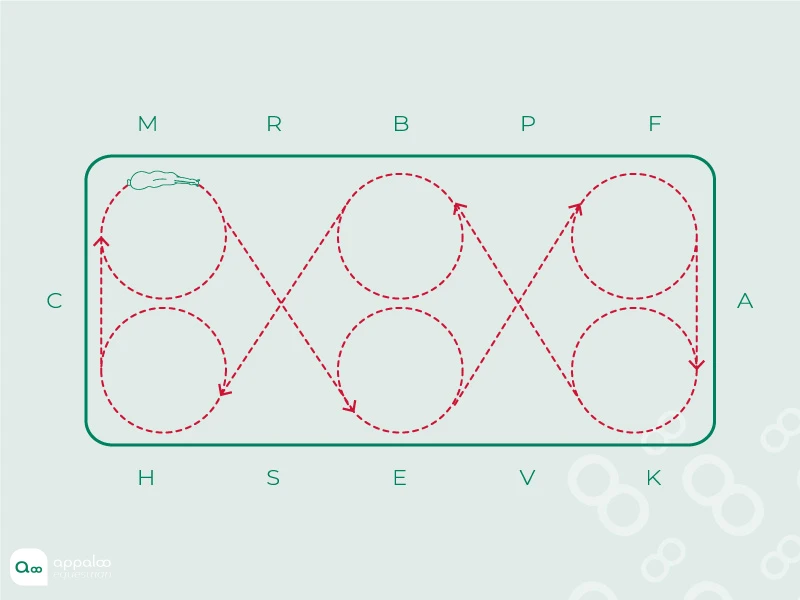
Dressage | Medium
🎯 Keep the horse supple.

 Mustang
1 comments left · 0 published riding session
Dressage | Medium
🎯 Keep the horse supple.
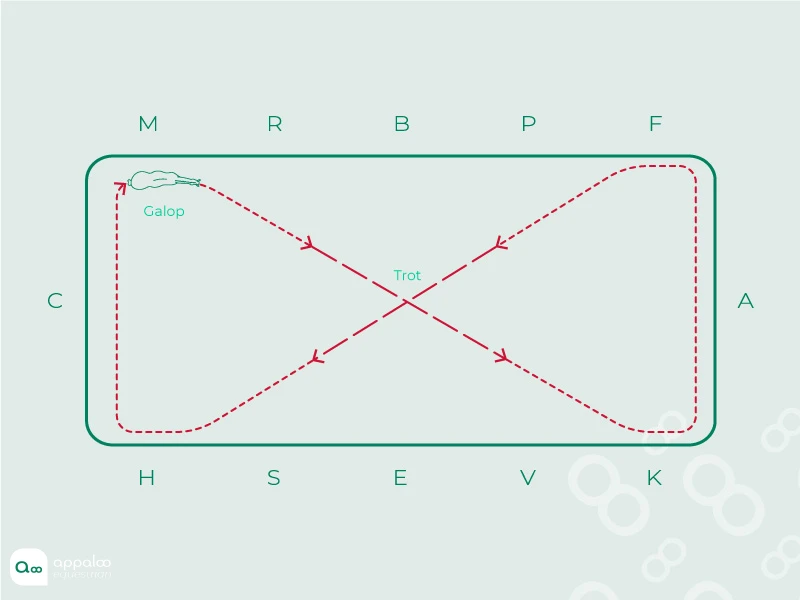
Dressage | Easy
Introduce flying changes
 PREMIUM
Groundwork | Hard
This exercise helps your horse: - Challenge his lateral balance - Activate the thoracic sling alternately left and right by shifting his body weight first onto the right shoulder, then onto the left
 PREMIUM
Lunging | Easy
This exercise helps your horse to: - Challenge his lateral balance, engaging his thoracic sling alternately to the right and left - Challenge his longitudinal balance, also engaging the thoracic sling - Take responsibility for maintaining his own balance
 PREMIUM
Lunging | Medium
Linking tight curves and straight lines on the lunge helps to: - challenge the horse’s lateral balance (and therefore engage the thoracic sling alternately on each side) - encourage the horse to take responsibility for maintaining his own balance
 PREMIUM
Lunging | Easy
or your horse to properly engage his thoracic sling, you’ll need him to be: - relaxed - in a rather low-head posture The spiral exercise helps develop lateral balance, which means the horse mobilizes his thoracic sling alternately on the right and left sides. Because this exercise involves riding on curves, often quite tight ones, be careful not to ask for it too long or too often. If your horse is young, has trouble finding his own balance, or has physical issues that show up on tight curves, limit this exercise to a few minutes each direction and prioritize wide curves (like the large spiral).
 PREMIUM
Dressage | Easy
Serpentine patterns are excellent exercises to challenge the horse’s lateral balance and therefore the tone of his thoracic sling, thanks to the continuous alternation from right to left.
 PREMIUM
Dressage | Medium
Variations in frame and head height help challenge the horse’s balance and therefore the tone of his thoracic sling.
 PREMIUM
Dressage | Medium
La variation d'amplitude est un excellant indicateur de la tonicité de la sangle thoracique. Cette variation met l'équilibre du cheval à l'épreuve et lui demande donc de "se tenir" donc de maintenir son centre de gravité, et donc de solliciter sa sangle thoracique.
 PREMIUM
Dressage | Customizable
The walk-trot transition is a good indicator of the tone of the thoracic sling. If your horse tries to avoid using its thoracic sling, the quality of your transition will suffer.
 PREMIUM
Groundwork | Medium
Cue and refine lateral movements until your horse can perform them over a ground pole, to improve precision, hoof control, and desensitisation.
 PREMIUM
Dressage | Hard
Halt – rein-back – depart in collected trot
 PREMIUM
Dressage | Medium
Alternating a counter-shoulder-fore and a shoulder-fore down the long side
 PREMIUM
Dressage | Easy
Asking for intra-gait transitions in all three gaits on a 20-meter circle
 PREMIUM
Dressage | Easy
Letting the reins slip and varying your horse’s frame on a 20-meter circle
 PREMIUM
Dressage | Easy
Alternating simple transitions through all three gaits on a 20-meter circle
 PREMIUM
Dressage | Easy
Changing your horse’s bend on a 20-meter circle
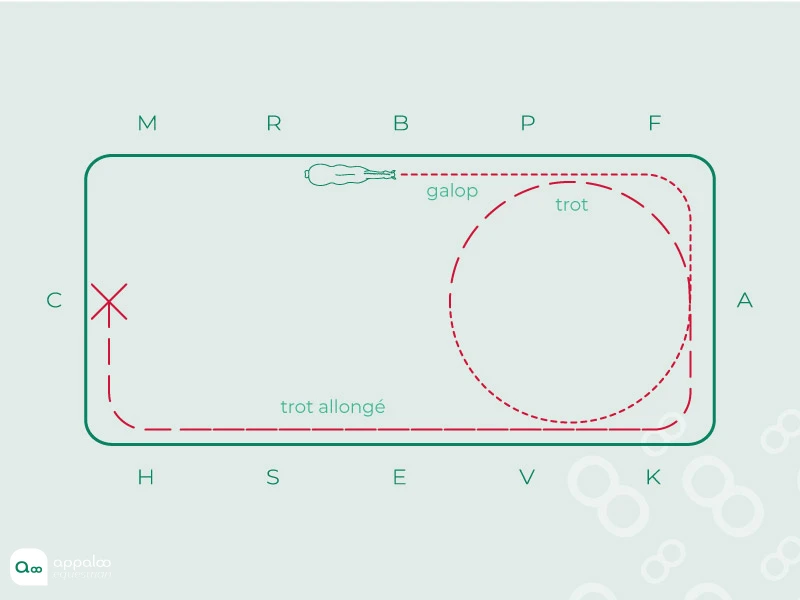
Dressage | Medium
Achieve smooth transitions and regain straightness after riding a circle.
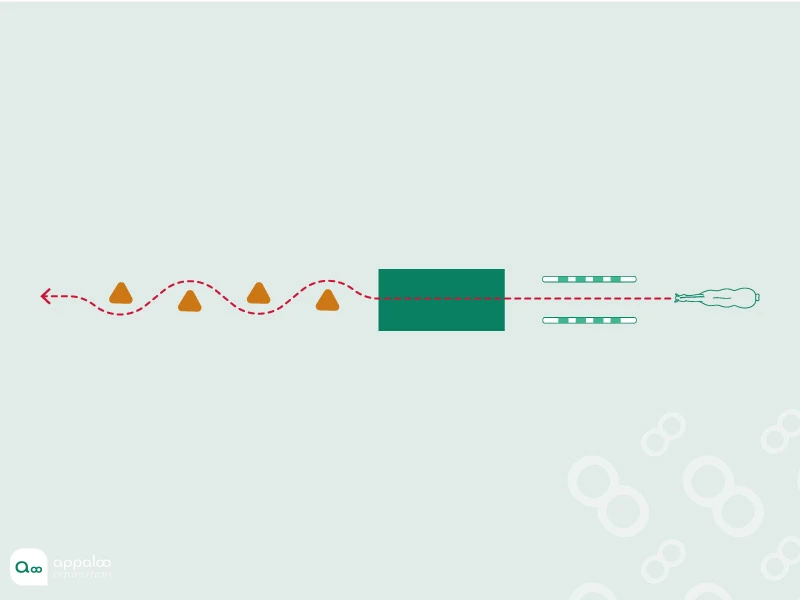
Groundwork | Easy
Accustom the horse to various types of footing, by adding increasing levels of difficulty.
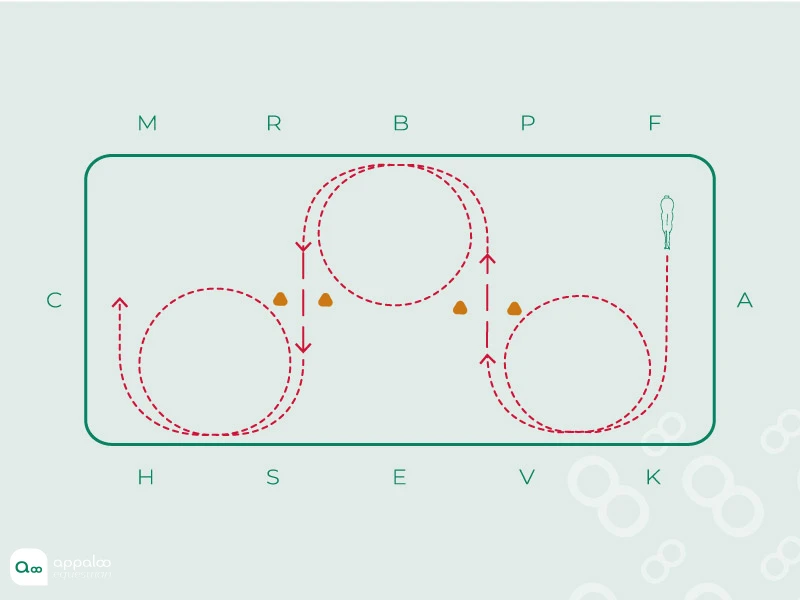
Dressage | Easy
Get a nice and soft circle with good contact on the inside rein. When slowing down to walk, make sure your horse is straight and still has kept that forwardness and doesn't slow down more than necessary.
Please sign in to save your favorites.