
Goal(s)
A setup that can be used over several sessions to work on different objectives.
Process
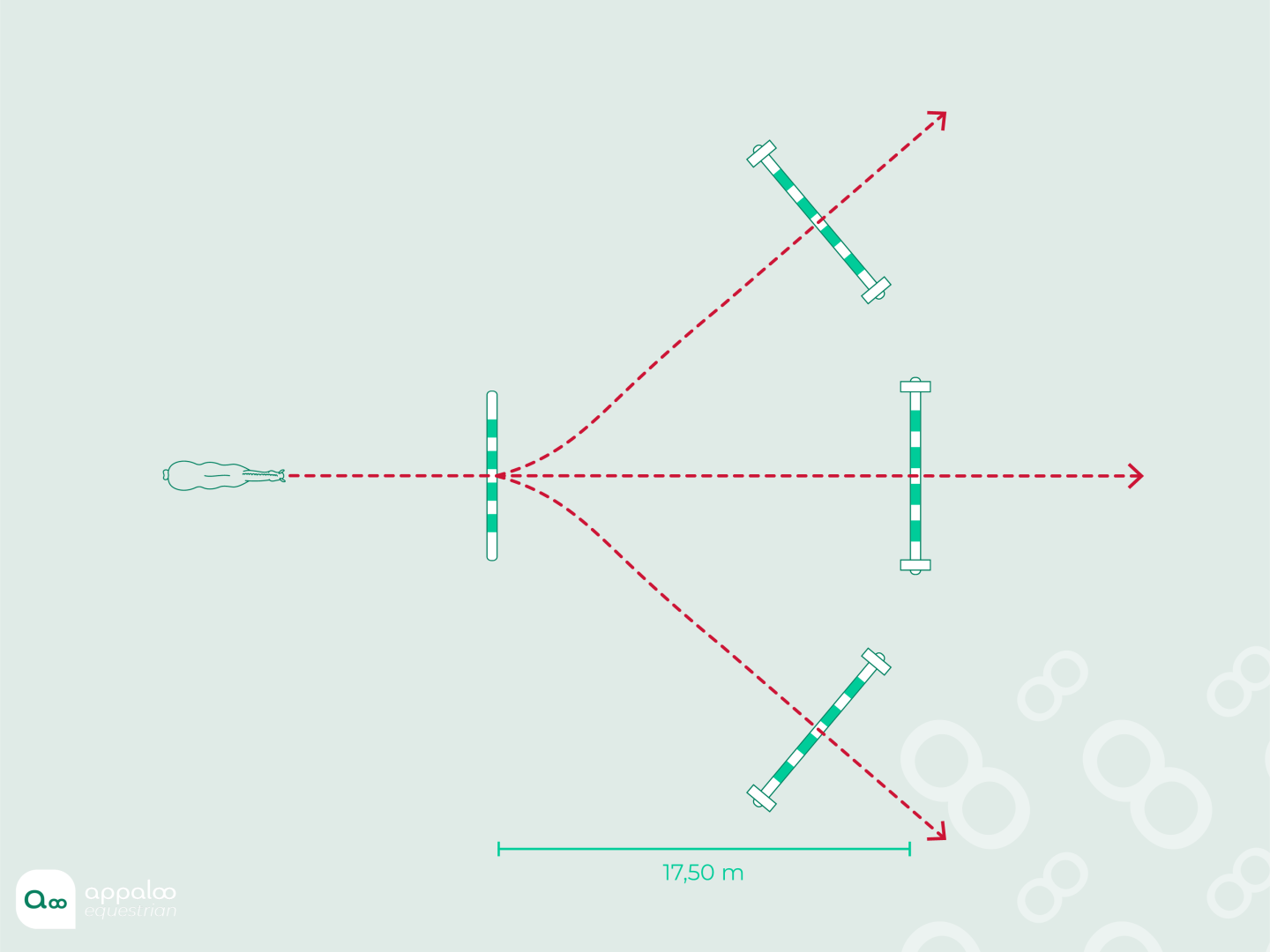
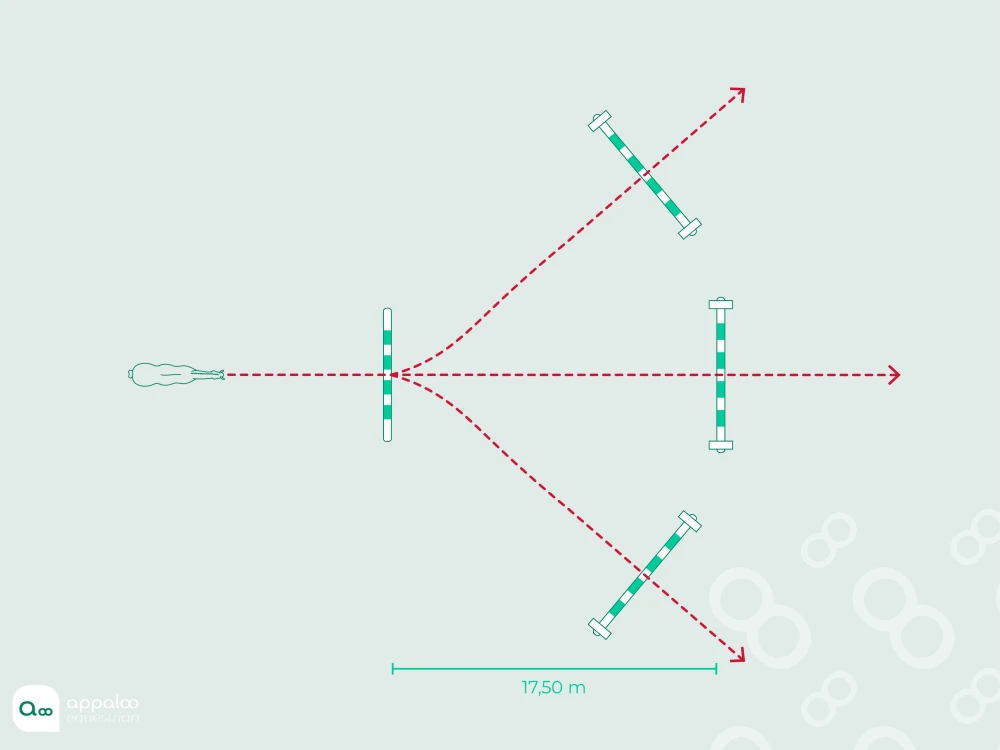
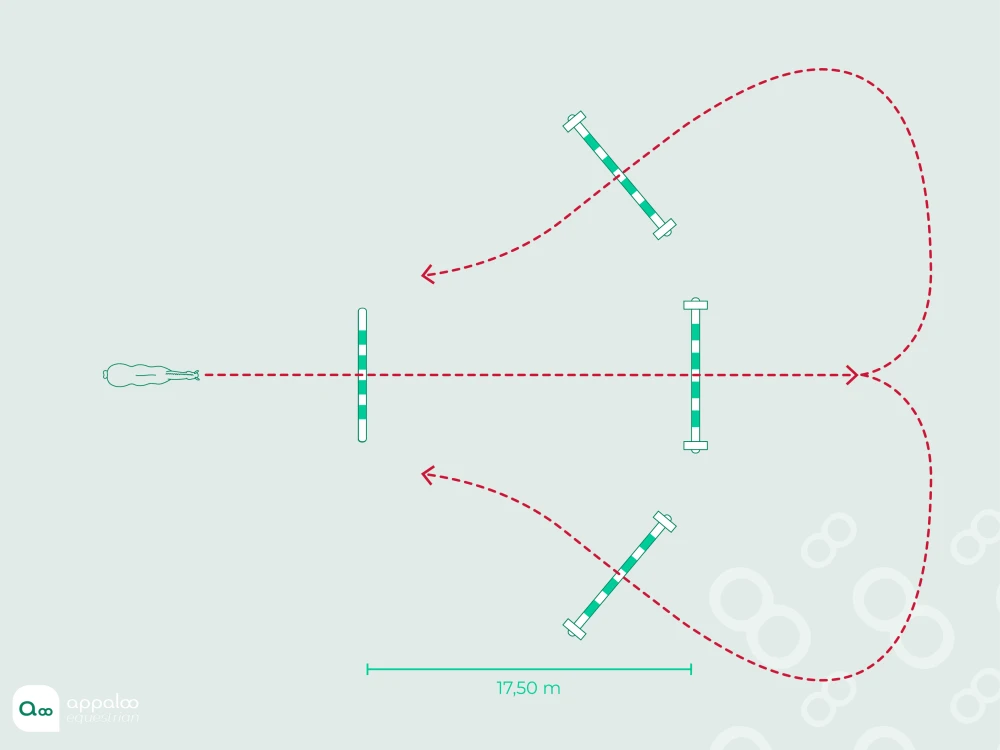
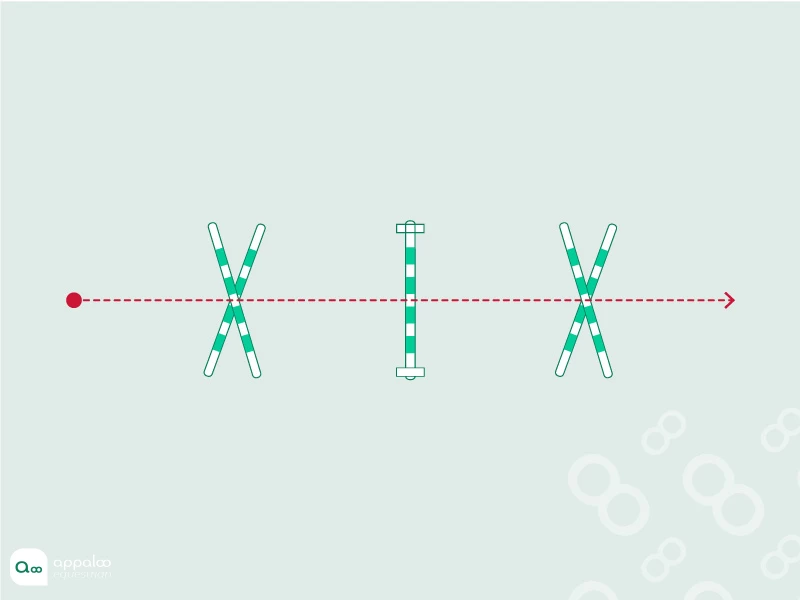
Objective 1: Line work (diagram 1)
Trot towards the first ground pole, then choose one of the three raised poles (straight ahead / to the left / to the right).
If another person is present, ask them to tell you which pole to take as you cross the first ground pole.
Objective 2: Stride work (diagram 1)
Using the same setup, in addition to working on your line, you will count your strides (the number of strides to be taken is established before the first ground pole).
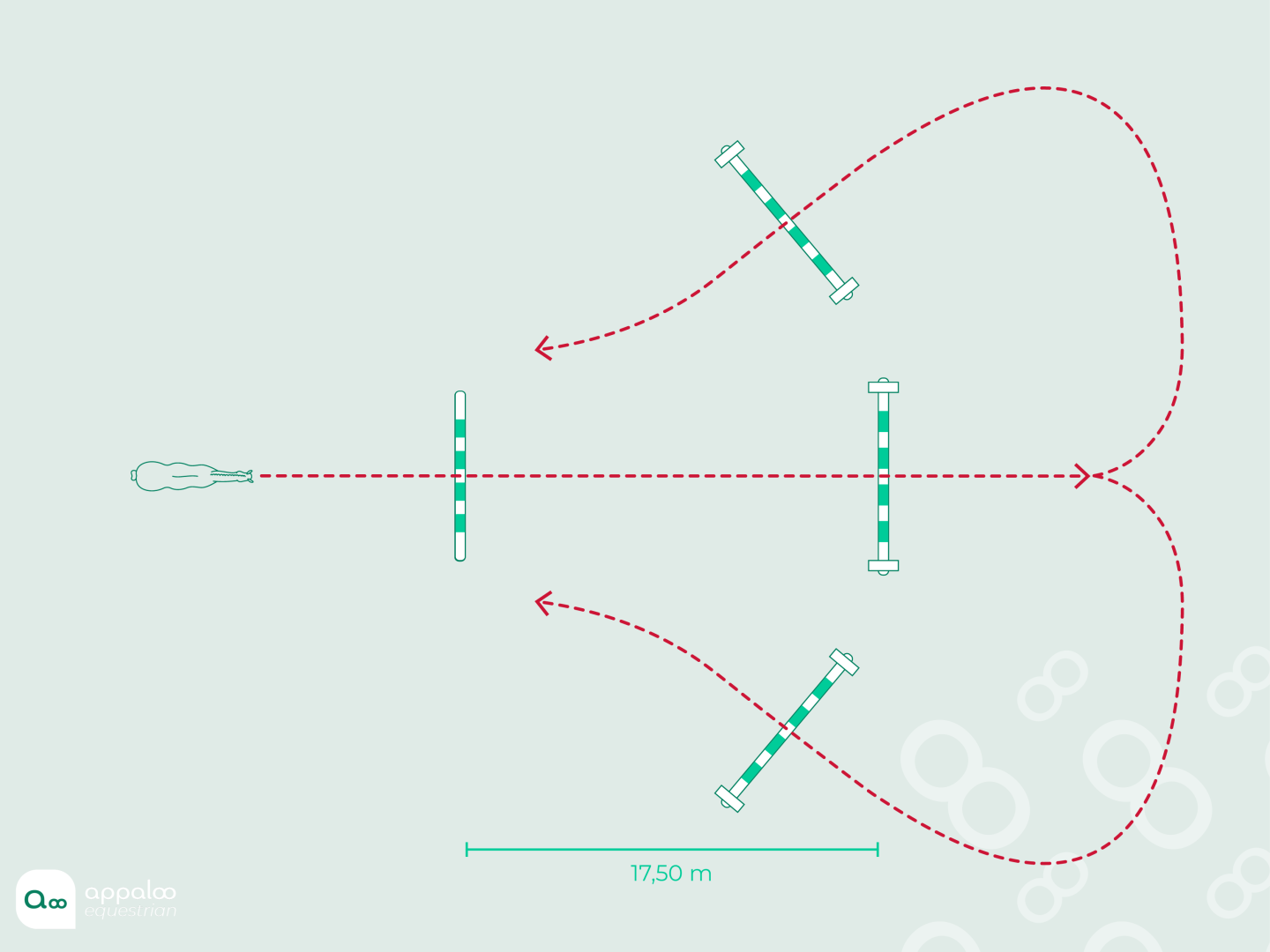
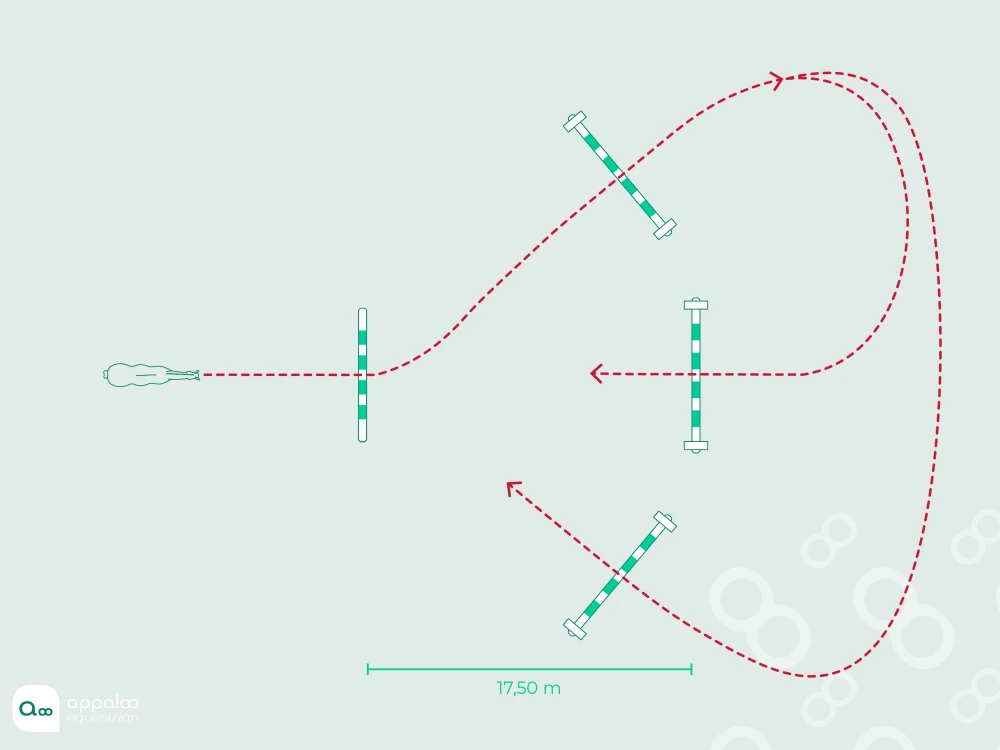
Objective 3: Landing work (diagram 2)
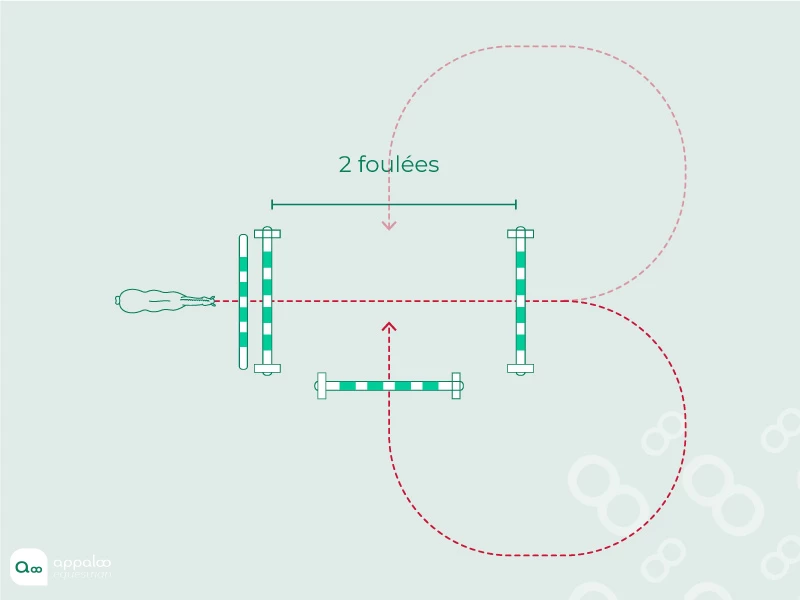
Using the same setup, go over the first ground pole, then the pole straight ahead (set up as a vertical). On landing, land on the left lead and jump the obstacle on the left (left-hand curve), or land on the right lead and jump the obstacle on the right (right-hand curve).
Objective 4: Canter depart work (diagram 1)
Using the same setup, trot over the first ground pole, then ask for a canter depart (with the horse straight). On the left rein, jump the obstacle on the left; when departing on the right rein, jump the one on the right.
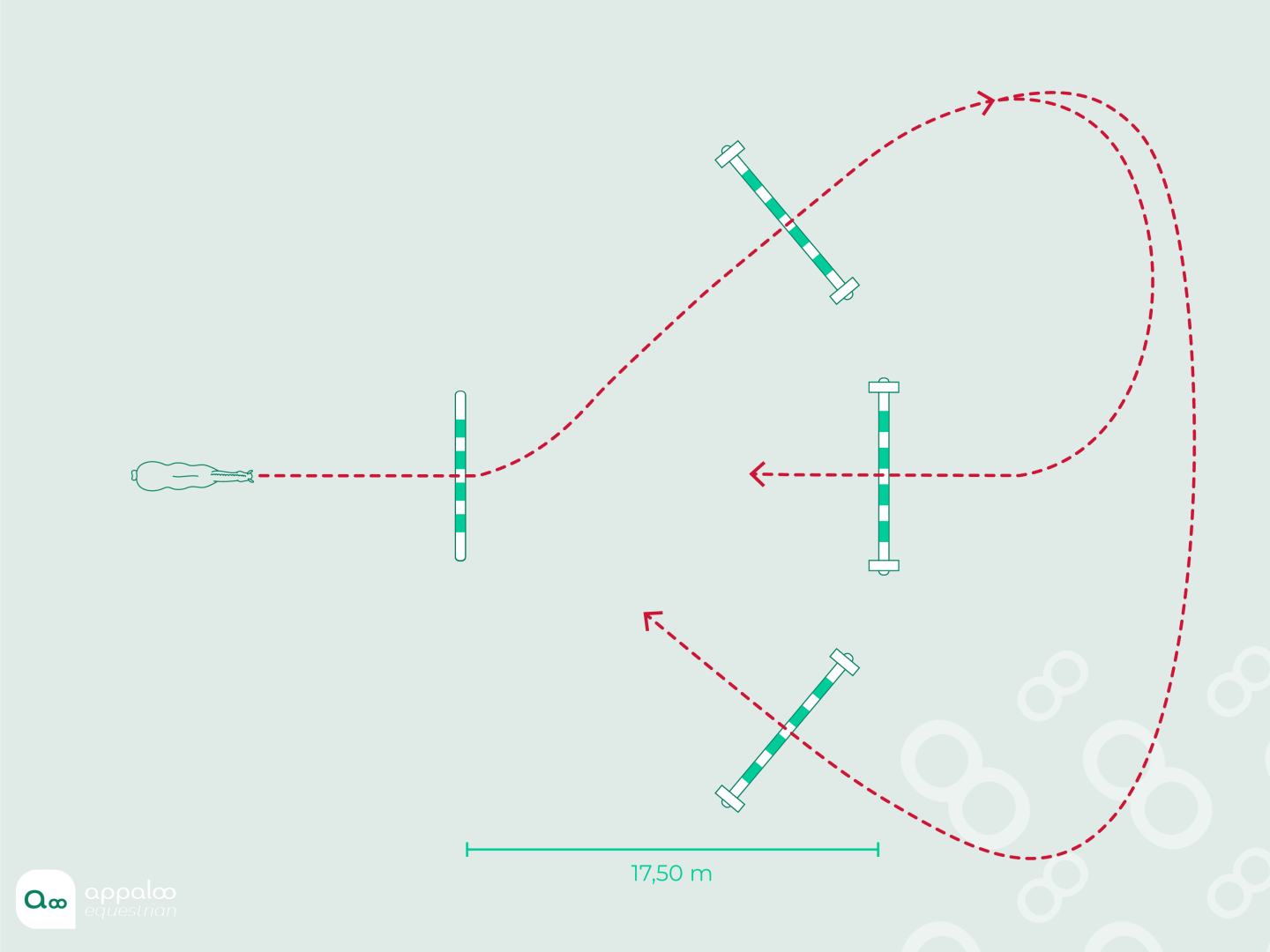
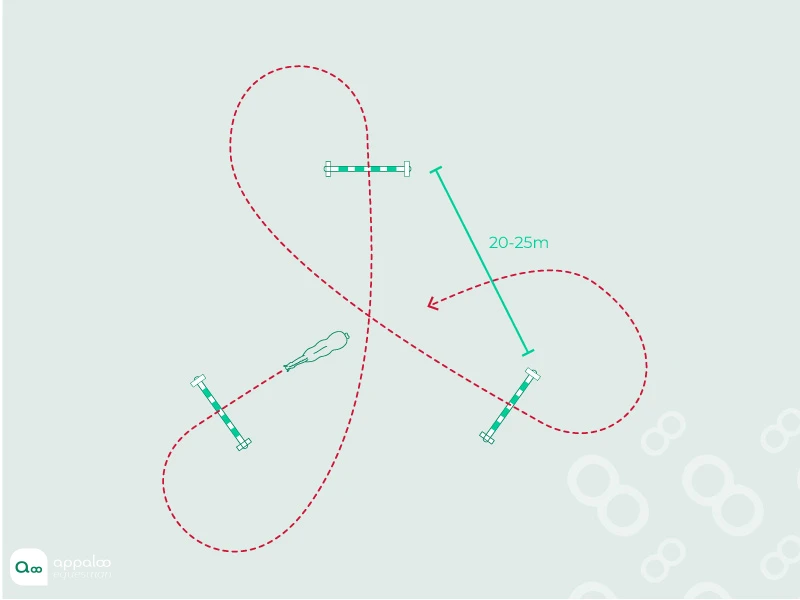
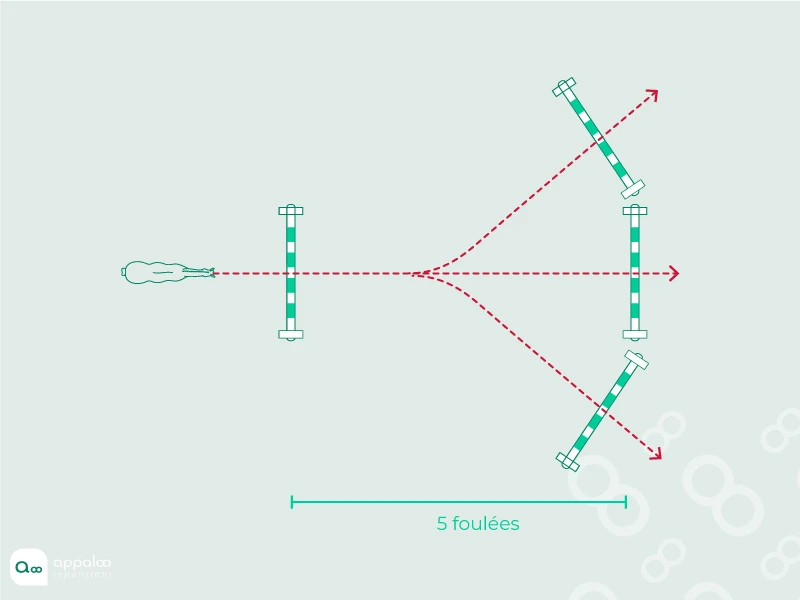
Objective 5: Flying-change work (diagram 3)
Approach the setup at the trot, go over the first ground pole, then pick up the left lead canter and jump the obstacle on the left. After landing, turn onto the right rein (right lead canter), then jump the obstacle on the right (wide turn) or take the central obstacle (tighter turn).
Difficulties
Several exercises using the same setup.
Do them in the order described; afterwards, you can have fun doing one pass using objective 2, then a second pass using objective 4, and so on.
Jumping obstacles on a curve helps improve your horse's balance and makes you more independent. Your horse will become more automatic and learn to execute the movement correctly, improving the quality of the landing. The flying-change exercises here are intended to continue or consolidate work that has already been done beforehand, not as a first exercise.
Similar sessions
Jumping | Medium
Goal: This exercise helps improve the quality of the lines to the fences, the horse’s balance in the turns, and the rider’s accuracy. It also helps to develop a more regular canter rhythm and better anticipation of the turns. The cloverleaf is an excellent exercise to prepare for show jumping courses with numerous changes of direction.
Jumping | Medium
Start small courses and turn at the jump
Jumping | Easy
Simple mechanization line to work on the topline and enhance the movement.
Jumping | Medium
React quickly, work on rider reflexes