Find your next riding exercise

Hundreds of riding exercises shared by riders and coaches*, across every discipline: dressage, show jumping, hunter, groundwork, lungeing, equifeel, mountain trail...

Tell us your discipline, your level, your working area and the equipment you have: you only see the sessions you can actually do at home!

Filter sessions by level, working area and equipment

544 sessions
PREMIUM

Dressage | Medium

La variation d'amplitude est un excellant indicateur de la tonicité de la sangle thoracique. Cette variation met l'équilibre du cheval à l'épreuve et lui demande donc de "se tenir" donc de maintenir son centre de gravité, et donc de solliciter sa sangle thoracique.

PREMIUM

Dressage | Customizable

The walk-trot transition is a good indicator of the tone of the thoracic sling. If your horse tries to avoid using its thoracic sling, the quality of your transition will suffer.

PREMIUM

Groundwork | Easy

Learn to obtain smooth and light lateral movements on the ground, starting from good hip control and a fine response to the stick cues.

leffet-elastique.jpgCoach's advice

Dressage | Hard

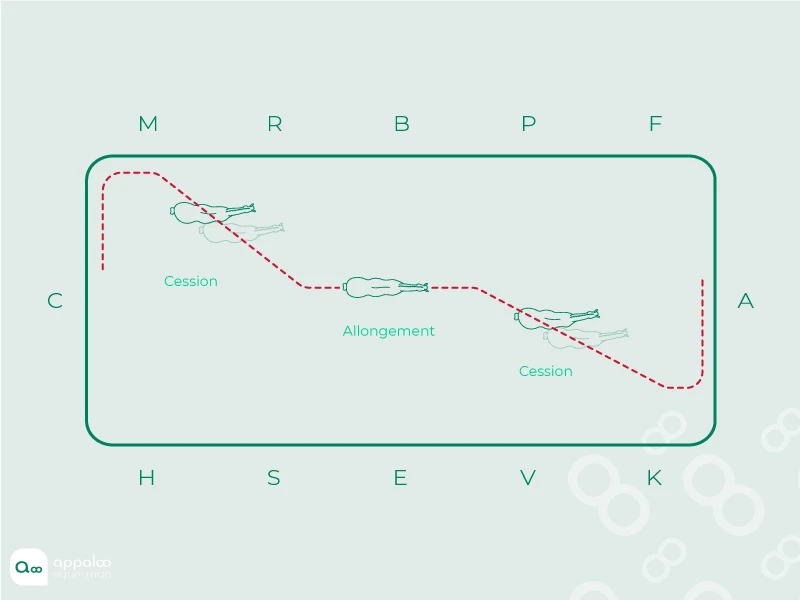
To supple the horse, improve hindquarter engagement, and increase stride length.

PREMIUM

Long rein | Medium

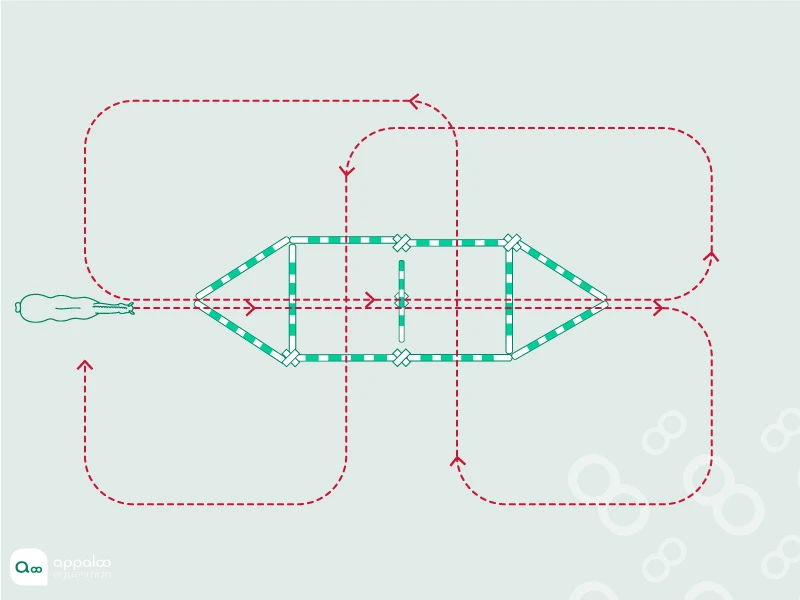
Be able to perform a figure-eight at the trot with two equal circles, including a transition to a halt, then backing up at the center of the figure-eight.

PREMIUM

Groundwork | Easy

Teaching the horse to move backward toward you by aspiration, meaning to step back while coming toward the human located behind him.

PREMIUM

Groundwork | Medium

Desensitising the horse to objects on the ground so that he is not afraid when they pass in front of or behind him. 👉 This exercise is an excellent prerequisite for long-reining work, but it also helps make the horse braver, more confident, and calm in unusual situations.

PREMIUM

Groundwork | Easy

The “changing eyes” exercise teaches the horse to follow a pressure, even when that pressure asks him to move in the opposite direction from the human. 🧠 This exercise develops: the horse’s ability to think, his ability to respond correctly to pressure, his confidence when moving without directly “following” the human.

PREMIUM

Groundwork | Easy

Help your horse understand that: 👉 When a pressure comes from behind his hindquarters (here using a 3.70 m rope), he should move forward. 👉 But when the rope is simply present or moves lightly, no reaction is expected ➝ this is desensitisation work. ✨ This exercise is a key prerequisite for long-reining in a halter: later on, the outside rein will help encourage forward movement. However, it is essential that the horse does not become anxious about this action.

PREMIUM

Groundwork | Easy

Being able to lead in both eyes with a connected horse — first in zone 2, then in zones 3 and 4

de-lappuyer-au-cavaletti.jpg

Cavalettis | Hard

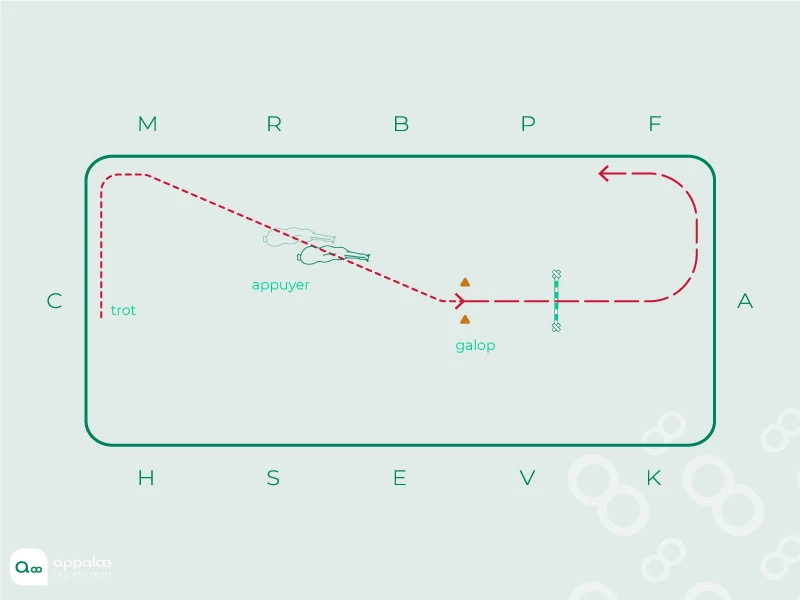
The aim is to use lateral work to achieve straightness, then proceed to jump the cavaletti, all while managing the horse's pace. This exercise develops straightness, lateral suppleness, accuracy of track, and quality of canter in front of a jump.

PREMIUM

Dressage | Hard

Halt – rein-back – depart in collected trot

PREMIUM

Dressage | Easy

Asking for intra-gait transitions in all three gaits on a 20-meter circle

* Unlock every Premium session

Riding exercises that match your real conditions

The problem is never a shortage of ideas — they are everywhere. The problem is finding an exercise you can actually do with the horse you ride, the ground you have and whatever equipment is lying at the edge of the arena.

That is exactly what our search filters do:

  • The discipline: dressage, show jumping, groundwork, lungeing, equifeel, mountain trail and many more
  • The level: beginner, intermediate or advanced, with the difficulty stated on every sheet
  • The working area: arena, lungeing ring, field or out hacking
  • The equipment: poles, cavalettis, wings, cones, equifeel props — from none to fifteen, you only get what matches what you own. No more frustration, and no more head-scratching to adapt an exercise to what you have.

Combine those four criteria and you get a tailored selection rather than a catalog to sift through. Add the exercises you like to your favorites and they stay within reach for your next sessions.

What an exercise sheet contains

Every exercise comes as a sheet, built to be followed at the edge of the arena with your phone in hand.

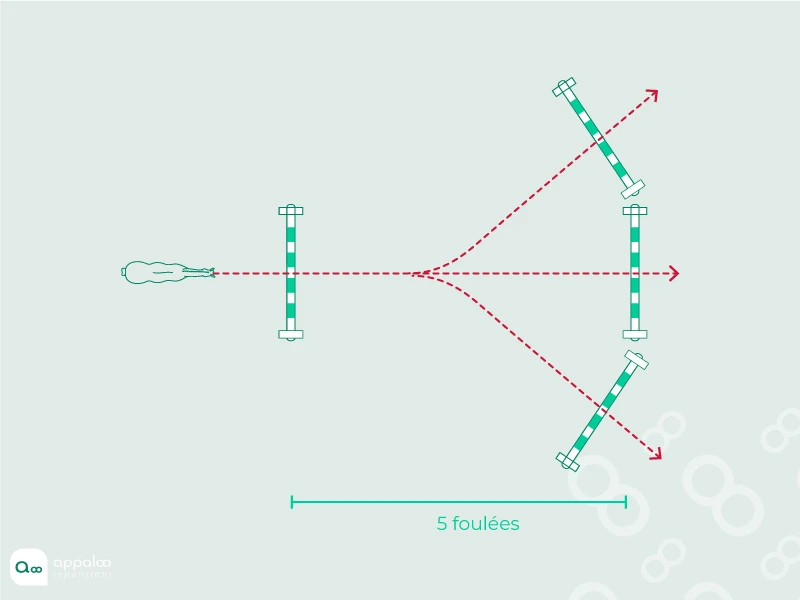
  • A diagram so you can see the pattern, the movements and the set-up to build before you get in the saddle.
  • A summary — session type, space needed, equipment required — so you know in three seconds whether the exercise is doable today.
  • A three-part walkthrough: the goals being worked, the exercise step by step, and the difficulties you may run into.

That last part matters most when you ride without a coach: nobody at the arena rail to tell you why the horse rushes through the line, but the answer is written down.

One more tool: the distance calculator

Getting the spacing between poles wrong is one of the classic reasons a jumping session falls apart. Our automatic distance calculator gives you the spacing to aim for — an estimate — based on your horse's size and the gait you are working: approaches, strides, fences, ground poles. Enough to help you set your grid up right.

Calculate the distance between your poles

Every discipline, every goal

Looking for a course idea for jumping? Would you rather build up gradually and start with a ground pole or cavalletti exercise? Our exercise sheets cover both.

Groundwork and lungeing let you keep progressing on the days you do not ride, or with a horse coming back into work. Equifeel and mountain trail build confidence and handiness — useful well beyond their own disciplines.

Whatever your goal, the idea stays the same: we give you the ingredients, you put the session together.

Frequently asked questions

A library built by riders

We are not the only ones writing sessions — our community contributes them. Do you have an exercise that works and is not on the site yet? Submit it, and it will join the library and serve other riders.

The more you take part, the further your profile goes. Every like, every comment and every published exercise earns you points: you start out as a “Foal”, then become a “Mustang”, a “Pegasus”, up to the “Unicorn” status reserved for the most active members.

Enjoy your session!

Propose my riding session